
My Role
Product Designer
Team
Lead Engineer
Tools
Figma
timeline
4 Months
Problem
Professors hated the newly launched faculty portal, but no one knew why. Usage was dropping, feedback was negative, and the root cause was unclear.
What I found
Through research, I discovered the issue wasn’t the tools themselves, but the navigation. The organization didn’t match how faculty think or work. Midway through the project, I also learned this was the only part of the system I could change.
Solutions
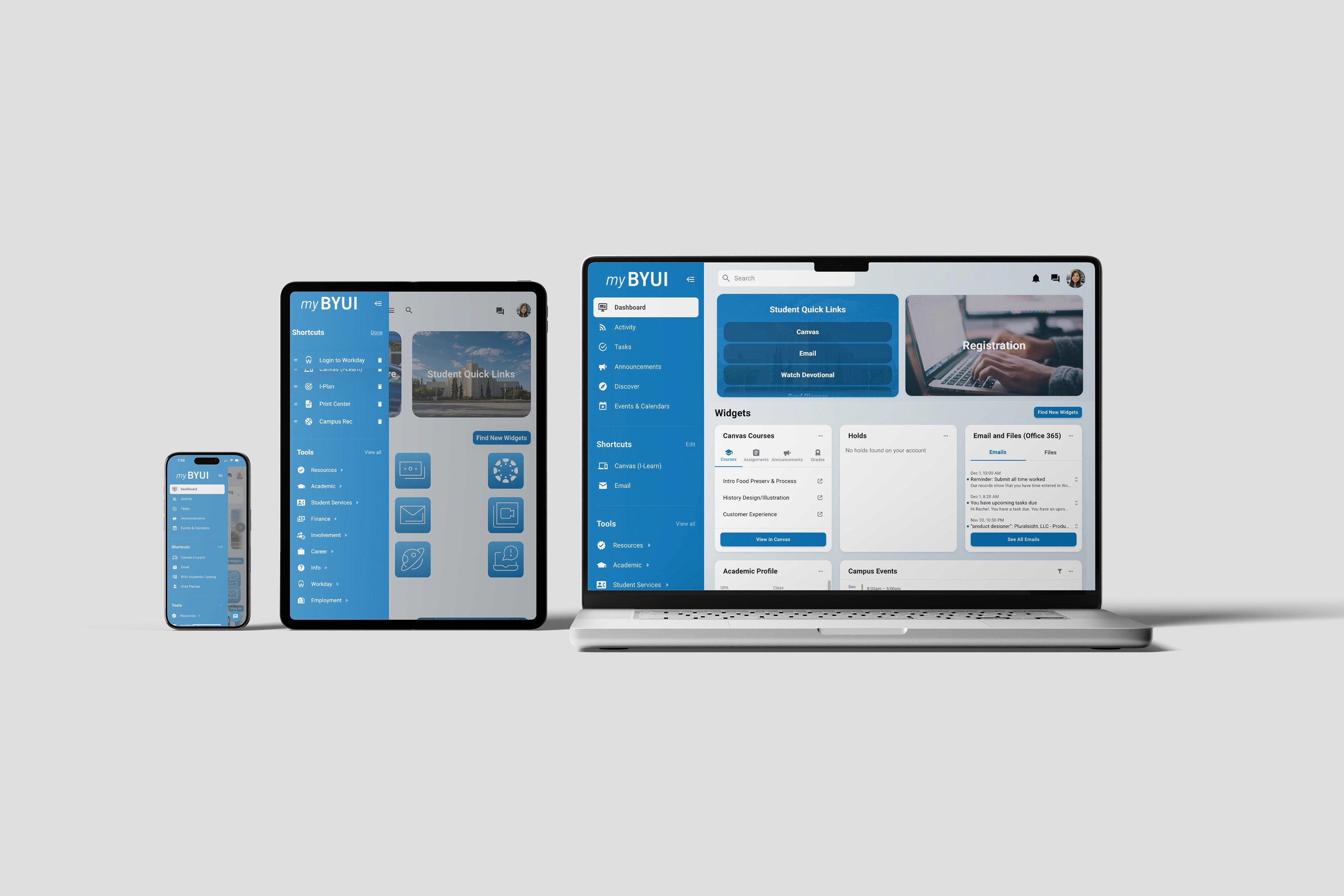
I focused entirely on fixing the navigation, redesigning the left navigation by reorganizing 130+ tools into faculty-centered categories, renaming sections to reflect real workflows, and surfacing frequently used tools through personalized shortcuts.
Results
Tool-finding time dropped by 82%, user satisfaction increased by 40%, and the university reclaimed an estimated 25,000 hours annually.
Problem
Adoption collapsed, but the cause was unclear
The portal was intended to streamline daily workflows for faculty, but instead it became a barrier.
Faculty actively avoided the portal
Usage data showed steep drop-offs
Feedback was blunt: “I spend more time finding the tool than using it.”
Despite a large financial investment in the platform, no one could explain why adoption failed. I was tasked with finding the root cause and fixing it.
Discovery and research
Learning from professors!
I interviewed faculty about their daily responsibilities, the tools they rely on, and where friction shows up and then asked how the portal supported that work. I took the same number of professors from each college to reduce bias.
I validated these insights with six months of clickstream data to see what professors were actually using.
Interviews
Insights
Months Analyzed
Key insight
Despite having access to over 130 tools, the majority of faculty usage consistently clustered around the top 10.
And they consistently asked for easier access to those tools.
The Solution
A system that aligns with how admins think
We wanted this interface to be easy, and quick. Admins don't have an in-depth business knowledge, the same as credit analysts do. We built a solution giving them confidence in what they were doing and powering the front end
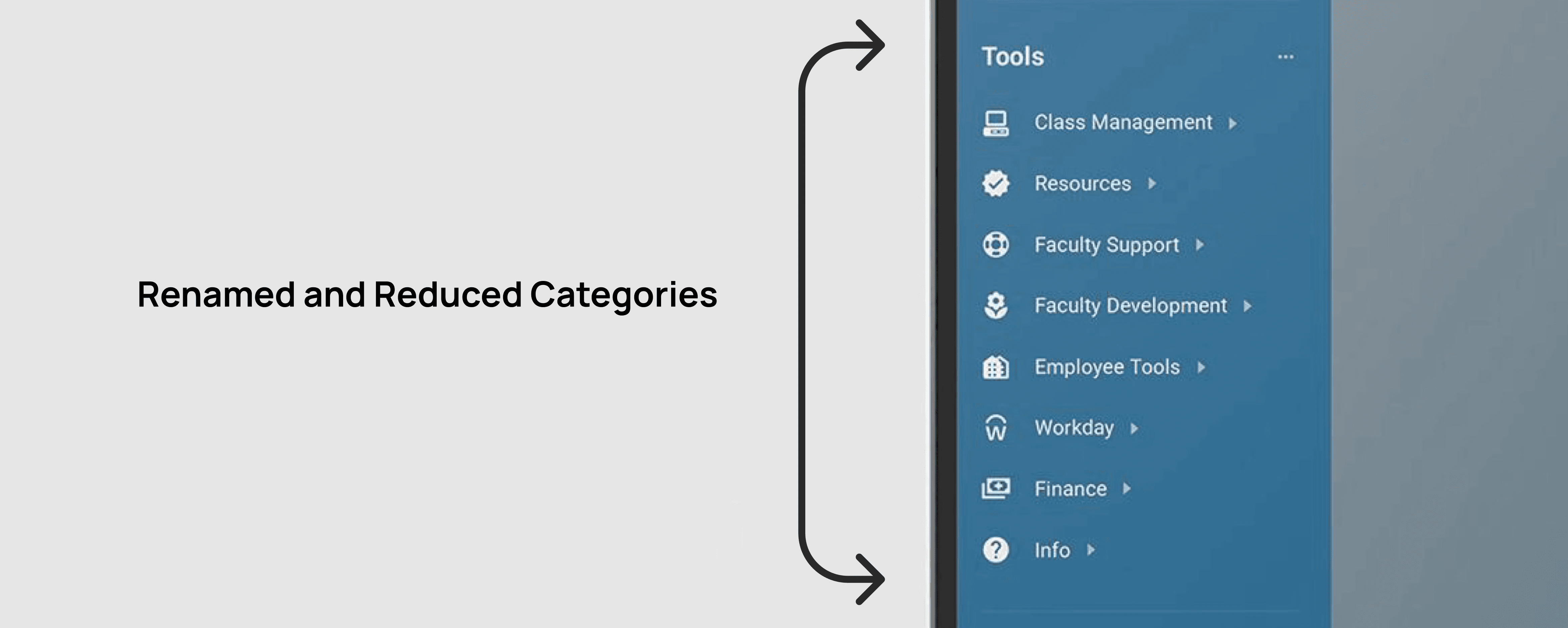
I reorganized 130+ tools from 15 vague, system-driven categories into 7 clear, faculty-centered ones, and rewrote navigation labels to reflect how professors naturally describe their work and workflows.
Strategic Impact:
Established a shared mental model across departments
Increases confidence and alignment between admins and credit analysts
Surfacing quick access to most used tools
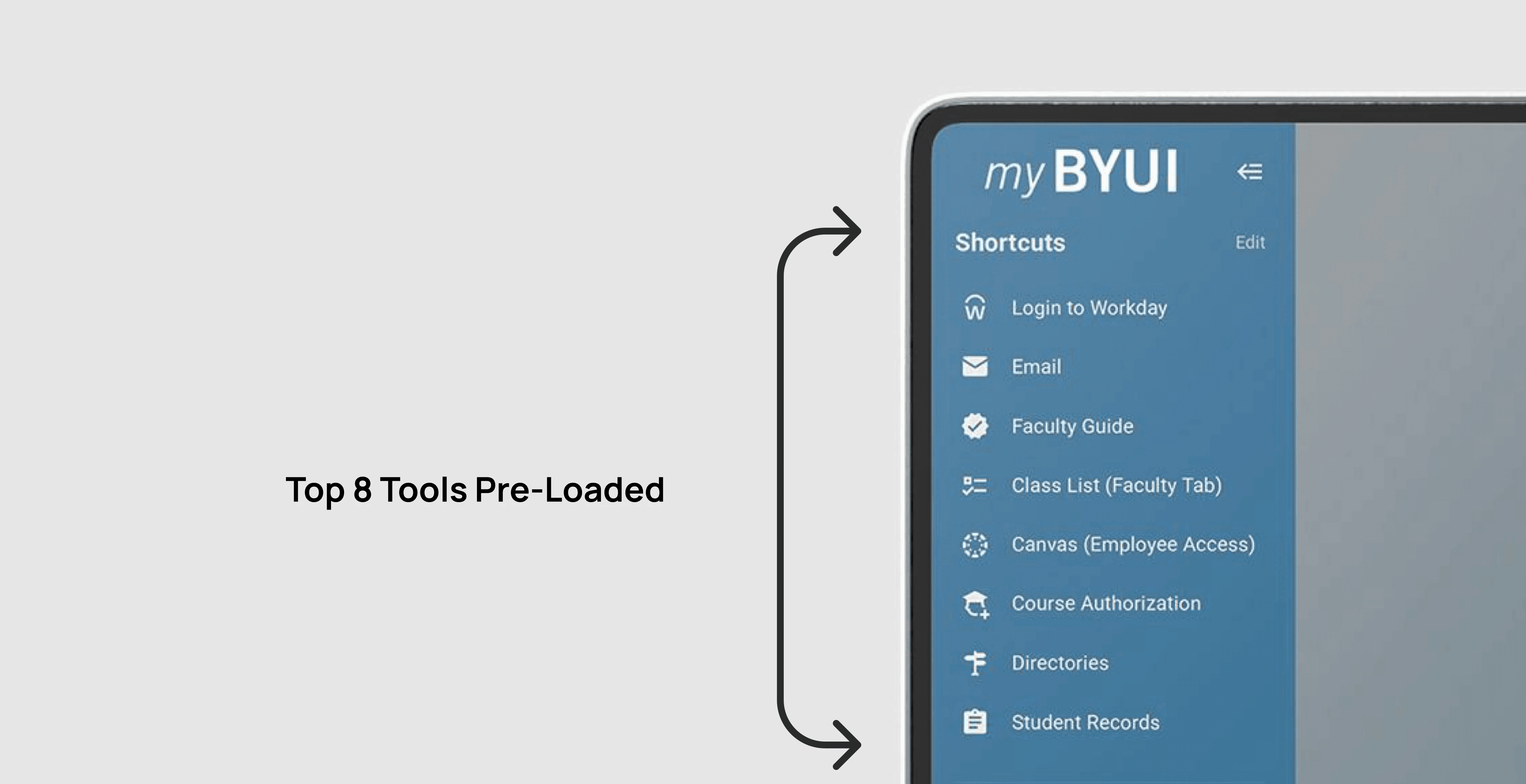
Research showed that most faculty activity centered around a small number of tools. I introduced a shortcuts section that was preloaded with the most-used tools.
Strategic Impact:
Reduced time spent searching for favorite tools
Lowered cognitive load by hiding rarely used options
The outcome
A system designed for confidence and scalability
What started as a widely disliked portal became a tool professors could use quickly and confidently. By aligning navigation with faculty mental models and surfacing quick access to the tools they rely on most, we had:
Retrospective
What I learned
Constraints force focus. Improving one surface—the navigation—delivered the biggest impact.
Behavior validates intent. Click data confirmed what interviews suggested and guided confident decisions.
Small wins scale fast. Seconds saved per task turned into thousands of hours and hundreds of thousands of dollars reclaimed.