
My Role
Lead Product Designer
Team
Product Manager
Lead Engineer
Tools
Figma
Figma Make
Claude
timeline
May 2025 - January2026 (6 Months)
Problem
Banks needed to configure their own thresholds, policies, and numbers, but couldn't in the current system.
Credit monitoring tools traditionally require 6–12 months of implementation.
Solutions
Built a scalable admin system designed to extend beyond Credit Monitoring and support future products without rework.
Bridged the expertise gap by translating complex credit logic into clear, guided controls that non-analyst admins could confidently manage.
Aligned with the new design system, creating consistency across admin experiences and setting a standard for future implementations
Results
This work is pre-launch, but early feedback from internal teams was clear: the admin experience solved long-standing configurability and setup challenges and established a repeatable foundation for future admin products.
Problem
A New Product That Needed More Than a Dashboard
Credit Monitoring was a strong product on the surface, but banks needed a way to “fuel the engine”.
Without institution-specific numbers, banks were left with:
Generic risk signals that didn’t reflect their actual credit policies
Early warnings that lacked context, forcing manual interpretation
Missed opportunities to act confidently on market and portfolio changes
1
Turn it on
2
Enter Policy
3
Start monitoring!
research
Designing for a Brand-New Admin Experience
To best understand future admins, I gathered insights from those closest to them:




This helped to build a foundation for the admin engine, rather than building on opinions.
Insights
Within my user interviews with those closest to admins, I uncovered the following insights:
01.
Configuration happened without visibility into end user
Admins could update backend settings, but had little understanding of how those changes affected the front-end analyst experience.
02.
Most effort was spent managing connection states
A large part of admin work was keeping integrations, permissions, and data connections healthy. These connections were critical to the end user, but were spread across multiple pages,
03.
The experience assumed analyst-level business knowledge
Admins weren’t evaluating credit or making lending decisions, yet the interface relied on analyst-level business terminology
The Solution
A system that aligns with how admins think
We wanted this interface to be easy, and quick. Admins don't have an in-depth business knowledge, the same as credit analysts do. We built a solution giving them confidence in what they were doing and powering the front end
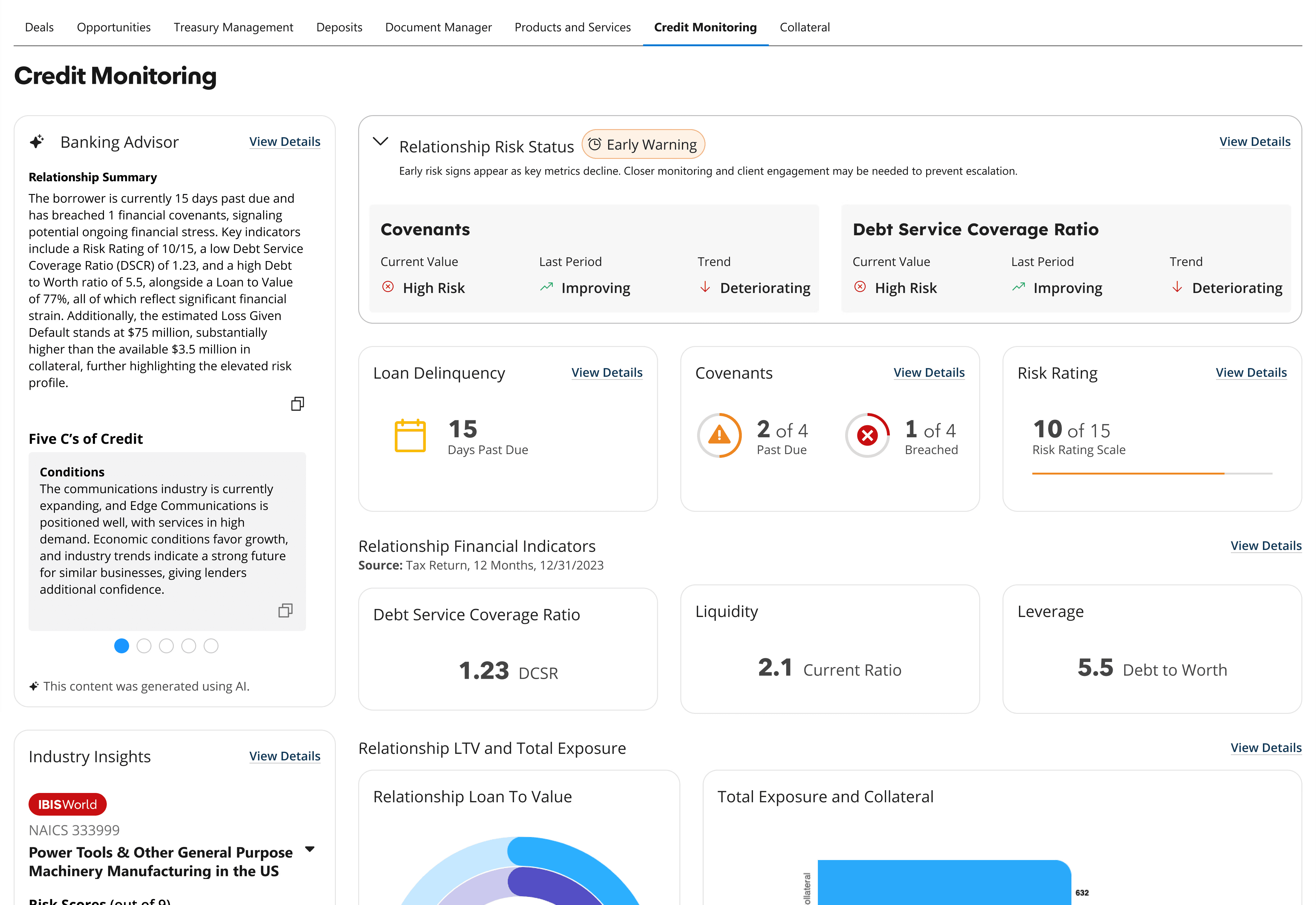
Admins lacked visibility into how their configurations affected analysts. This was from what data appeared on the dashboard to how it was presented.
I introduced a single, unified dashboard builder with a live preview, allowing both admins and credit analysts to be more specific and confident in their day-to-day work.
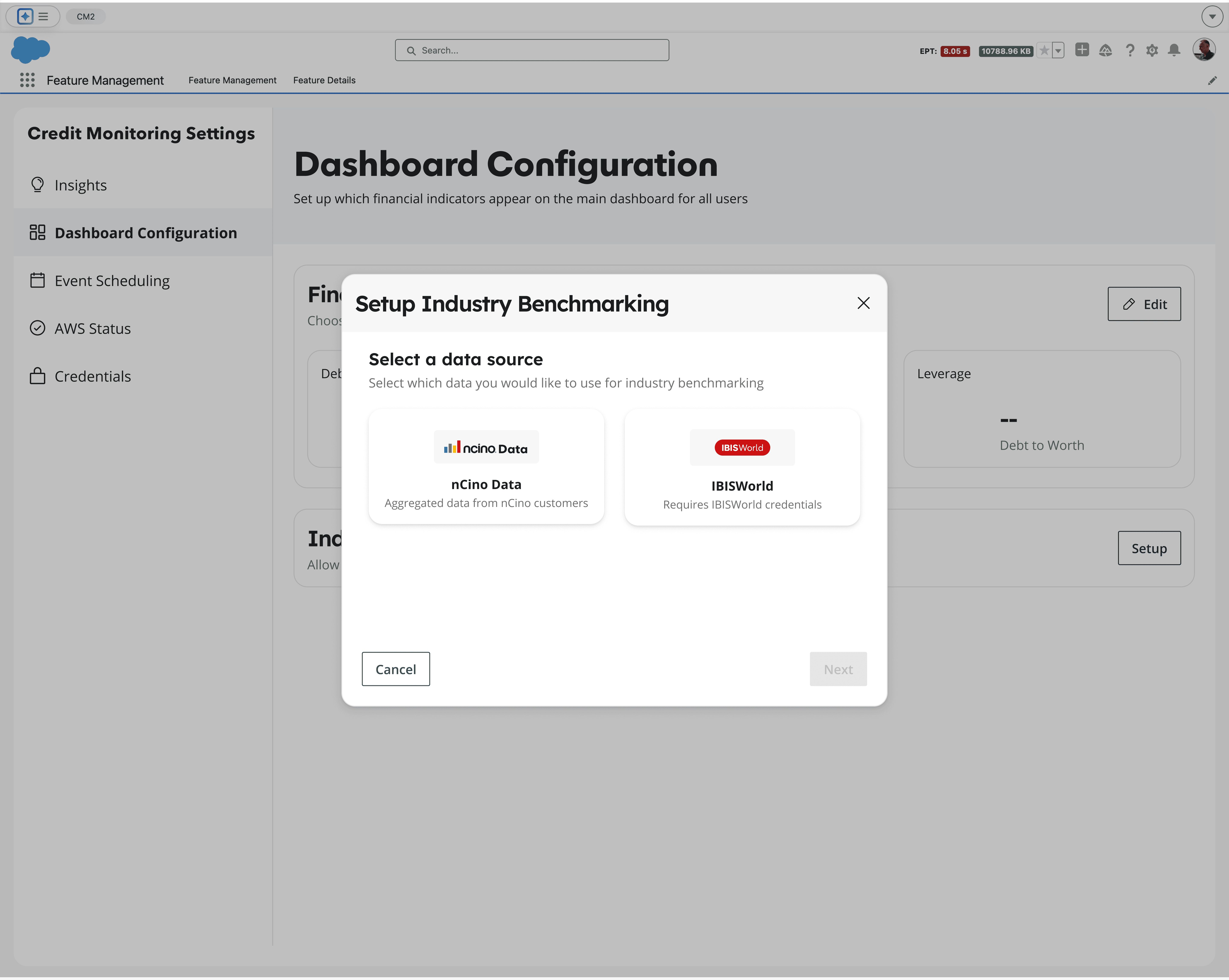
Easy setup for critical financial data
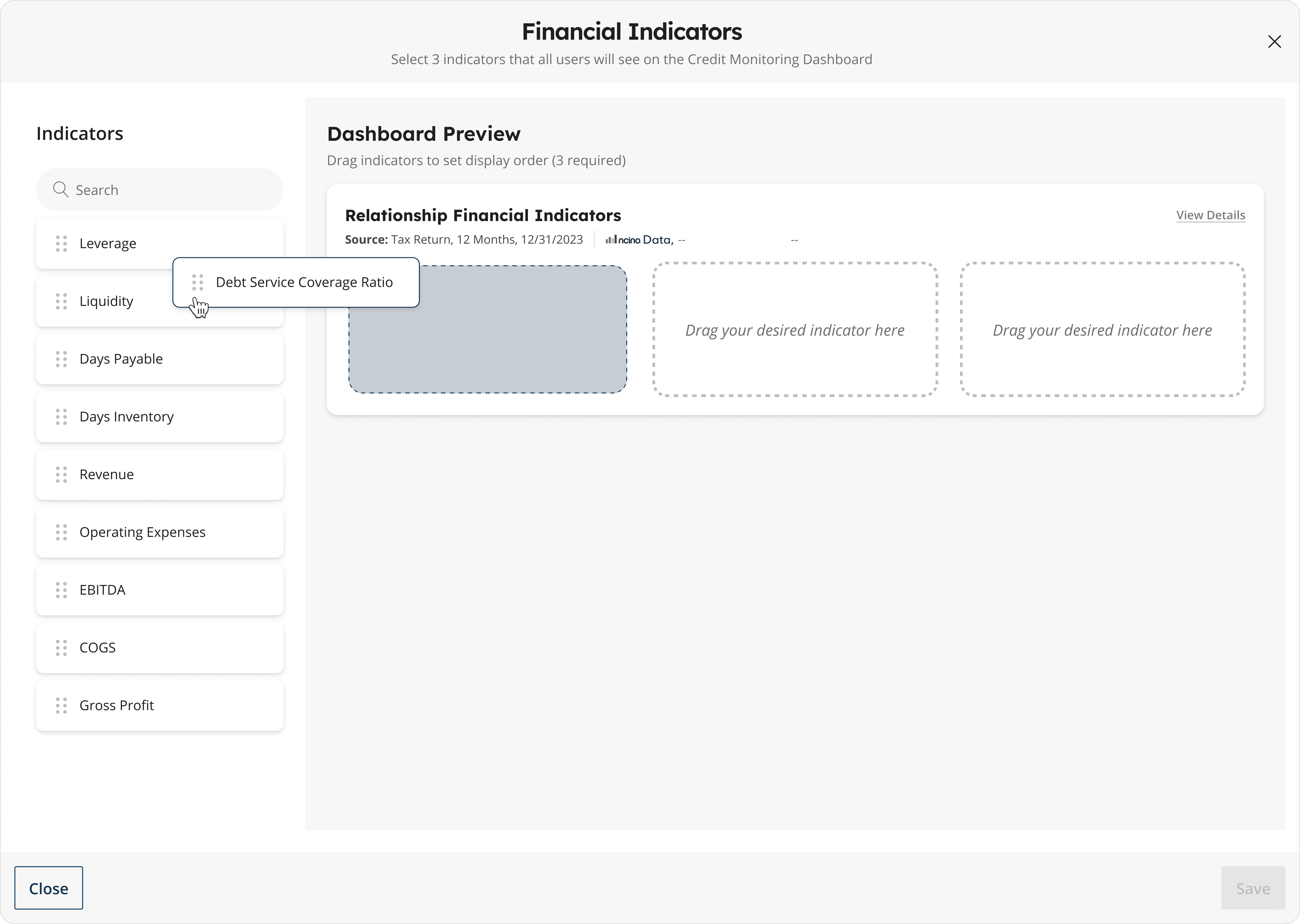
Specific dashboard layout for credit analysts specific layout
Strategic Impact:
Make dashbaord behavior visible and predictable before changes go live
Increases confidence and alignment between admins and credit analysts
Enables specific instituation decisions without trial and error
System health visible at all times
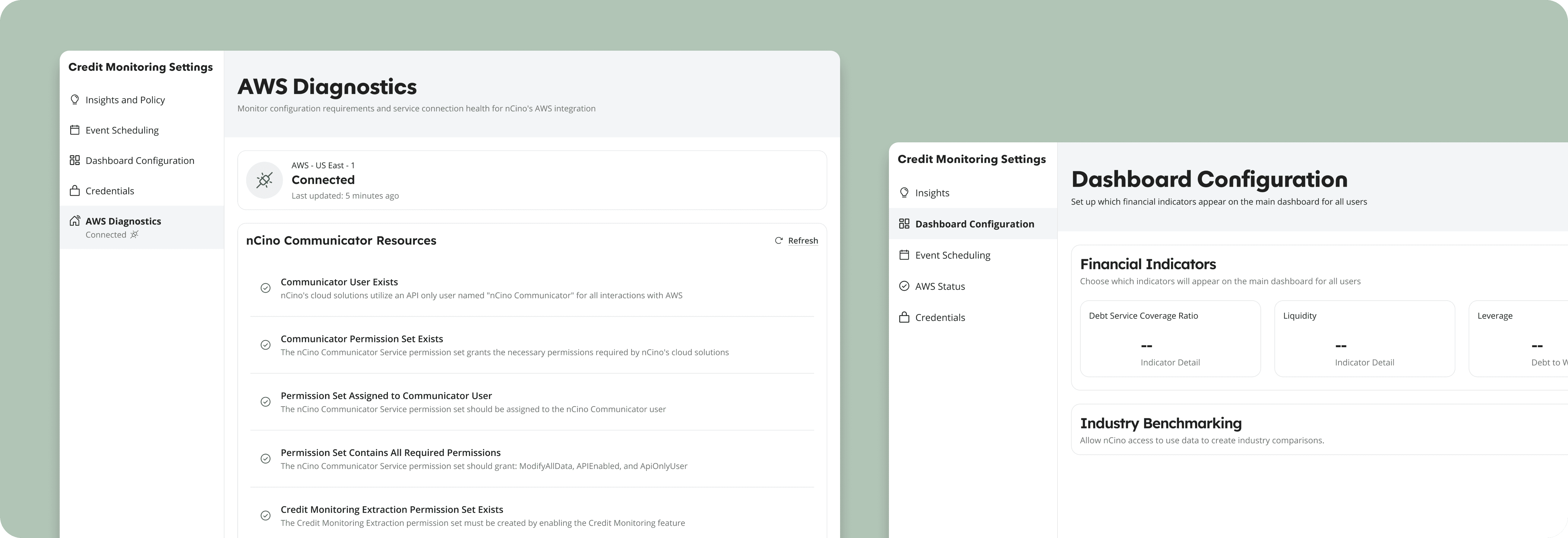
Admins live in connection states. A consistent status indicator shows the health of critical AWS connections, while a dedicated system status page provides deeper visibility into secondary connections and clear steps to resolve failures.

Live connection status
Most important connection first on the page
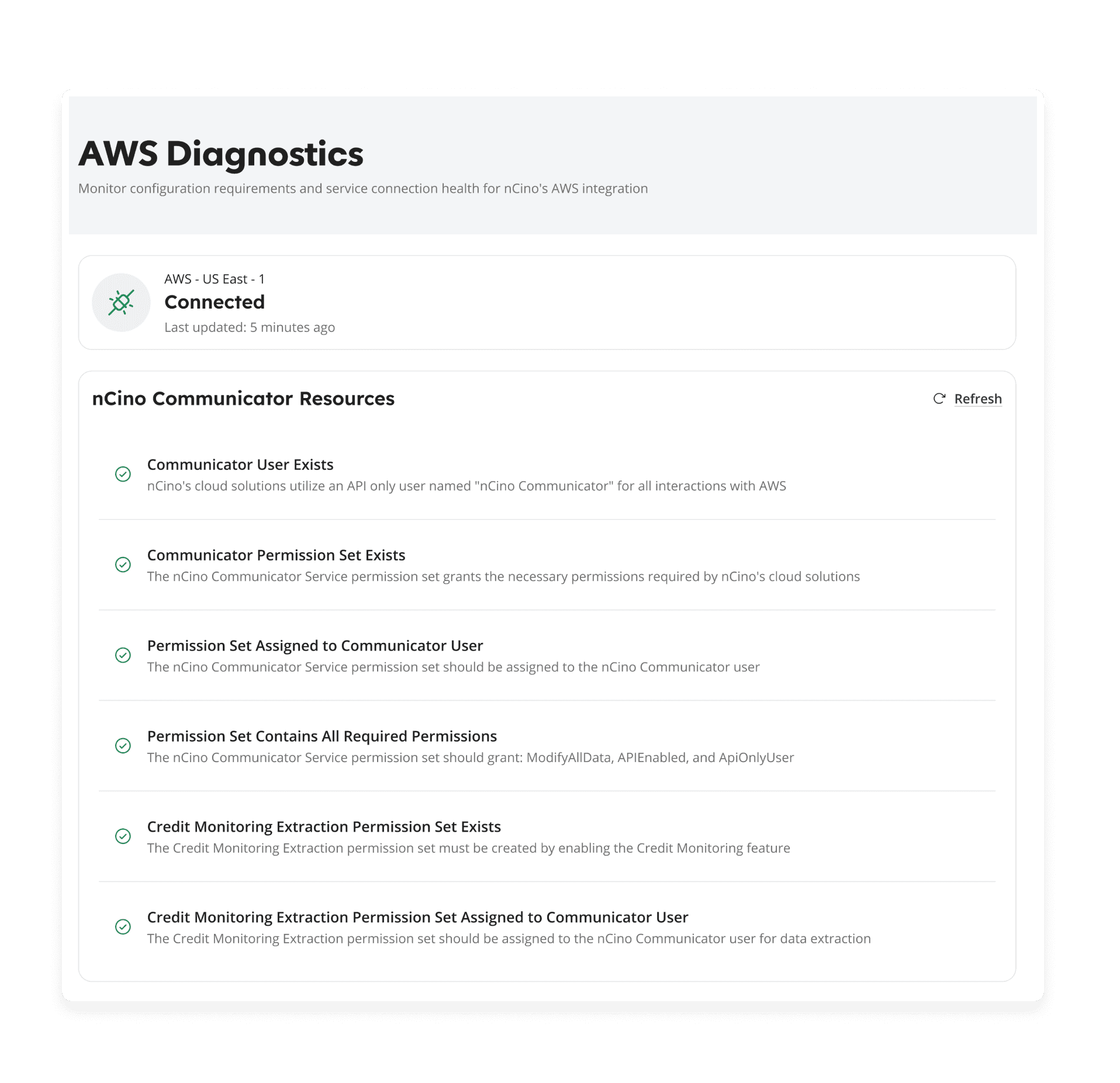
Full page of all connections. Easier to diagnose and fix!
Strategic Impact:
Builds trust in the system
Speeds up issue detection and resolution
One place to control how credit monitoring works
Banks need a single place to define risk thresholds, early warnings, and insights. Bringing these together makes it clear how the system evaluates and flags credit risk.
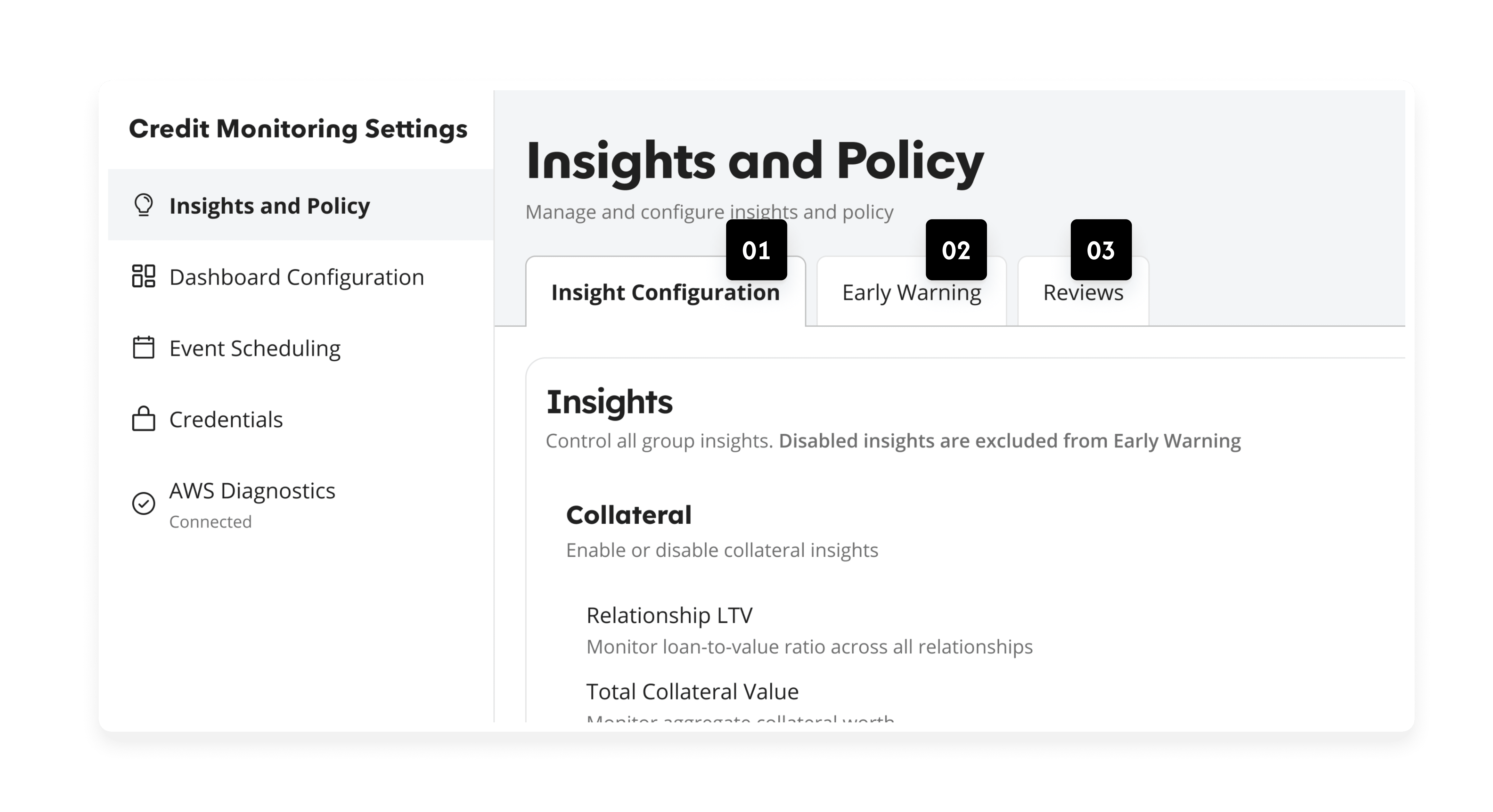
Home base for the top three tools existed in one location
Strategic Impact:
Turns complex credit logic into easy to control
Makes monitoring behavior easier to understand and trust
The outcome
A system designed for confidence and scalability
The goal was to turn a fragile, engineer-built admin into a scalable configuration hub that banks could set up in a single session. The final solution delivers clarity, guided flexibility, and real-time visibility into how configuration shapes the product.
Impact
Reflection
Designing for confidence and scalability
This project evolved in ways that weren’t originally planned. As different problems emerged, close collaboration with the PM and engineers were very important. By staying aligned and making decisions together, we were able to adjust direction without losing sight of user needs and helped in building a product that works well for faculty despite limited surface-level control.